
What bridges connect
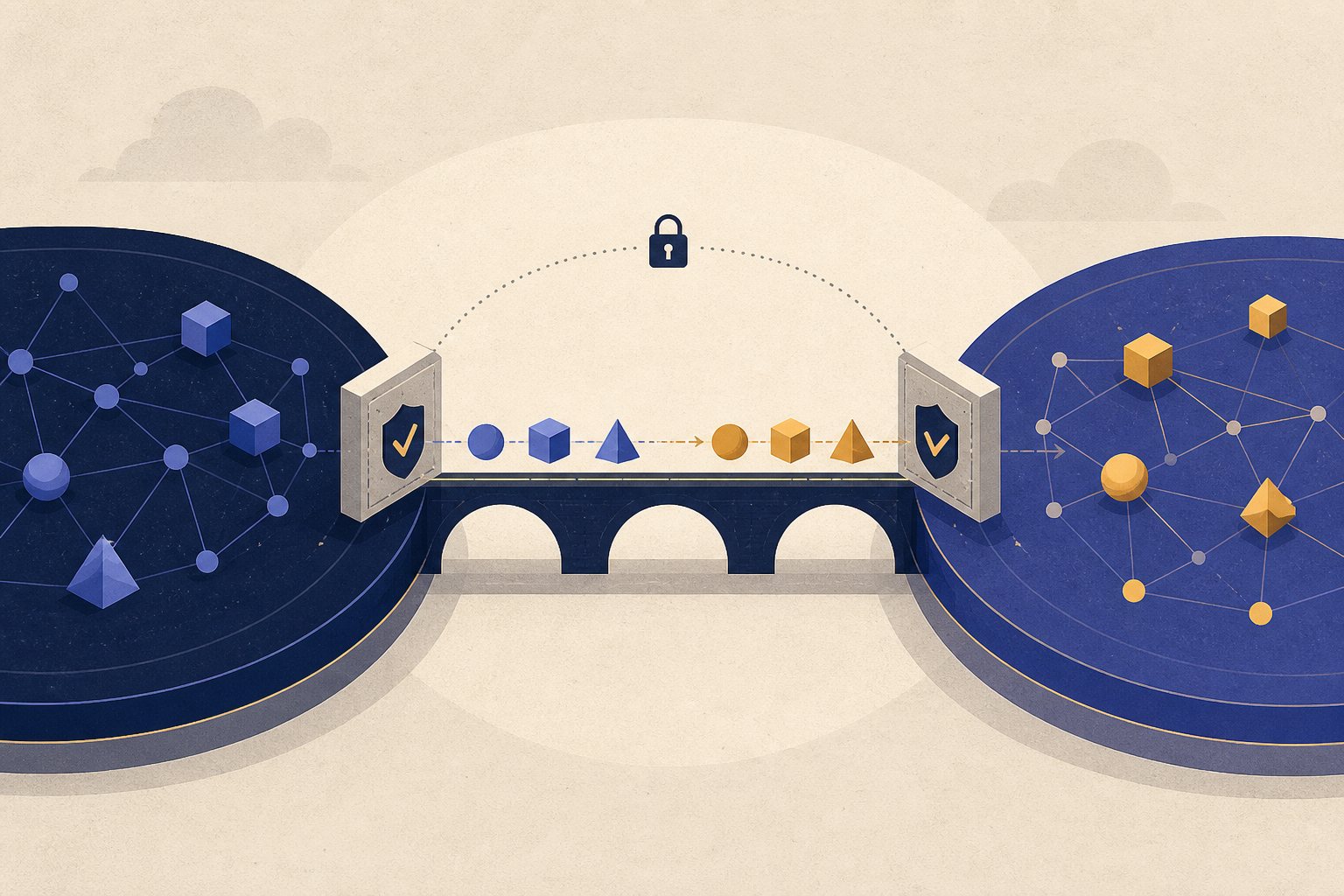
A blockchain bridge is designed to move assets or messages between networks. One model locks an asset on the original network and issues a corresponding representation elsewhere.
Lock, burn, and message verification
Bridges can depend on smart contracts, validators, or relayers, creating risks beyond an ordinary wallet transfer. Review contract security, key management, network selection, and liquidity.
Validators and upgrades
Before using one, verify supported networks and official addresses, test with a small amount, and check fees and withdrawal conditions. Convenience does not remove bridge risk.
A hypothetical transfer
A hypothetical user moving a token from Chain A to Chain B may encounter a bridge that locks the original and mints a representation, or burns on one chain before releasing on the other. Do not assume the received token has the same legal or technical rights as the original; check the issuing contract and redemption path.
Check withdrawals and liquidity
Find validator thresholds, message verification, upgrade and pause authority, withdrawal delays, and fees in official documentation. Liquidity for a bridged representation may differ from that of the original token. A small test transfer can catch address or network mistakes, but it cannot remove smart-contract or validator risk.
Recovery limits after an incident
A bridge adds dependencies: even if one chain works, a bridge contract or validator failure may prevent access to assets. An audit describes a review scope for specific code at a point in time; it is not a certificate of flawlessness. Continue checking incident notices, recovery plans, and whether issued representations reconcile with locked collateral.