
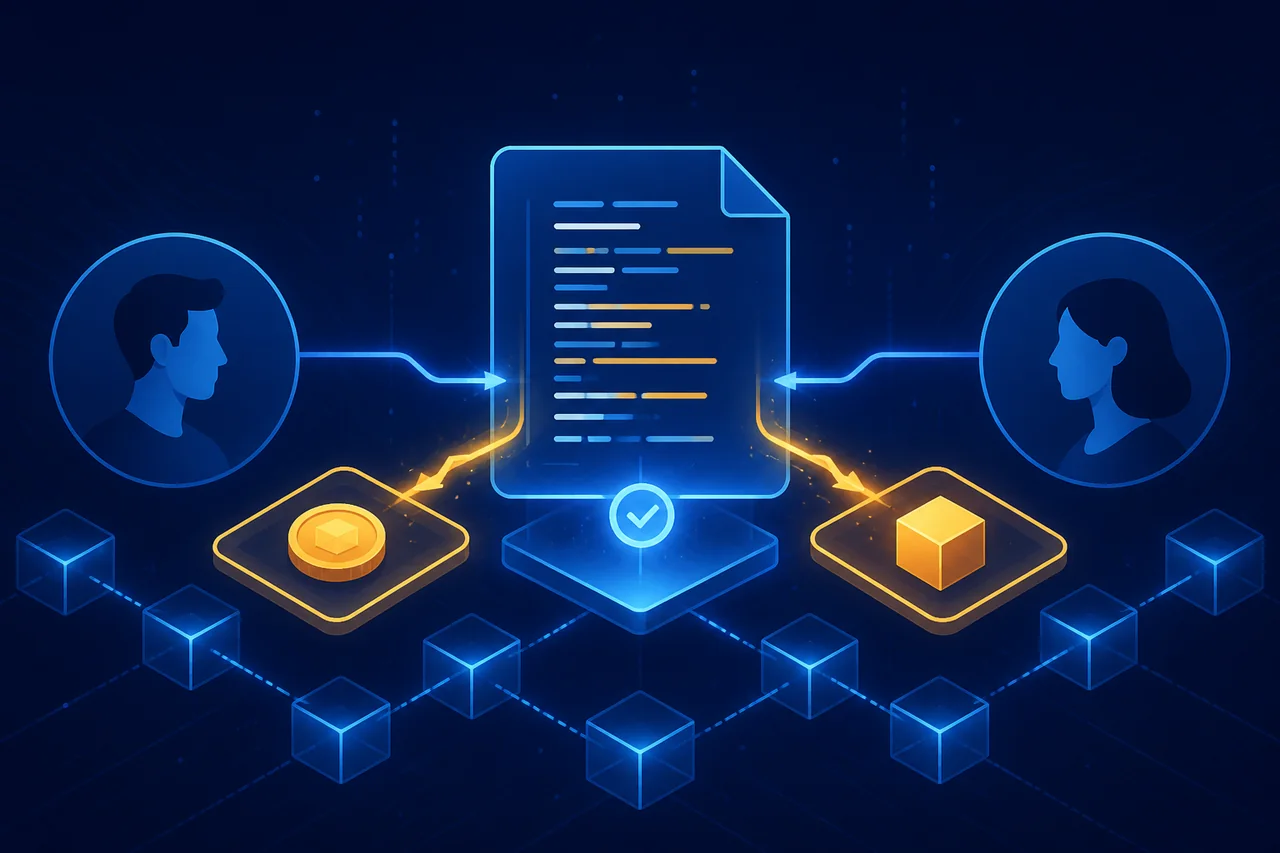
Closer to a program than a contract
A smart contract is a program deployed at a blockchain address and executed according to coded conditions. It is closer to an automated rule that changes state after receiving valid input than to a legal document that interprets intent. Public code does not automatically make its consequences understandable or safe.
State and functions
Contracts contain state, such as balances and settings, and functions that read or modify it. A read-only call may require no transaction, while a deposit or token transfer requires the user to sign a state-changing transaction. Understanding which function sits behind a wallet button is part of understanding the action.
Transactions and gas
State changes use validator computation and storage, so they require gas. A transaction that fails a coded condition may still consume fees for work already performed. Review the asset, allowance, expected fee, and minimum output in the signing request rather than approving an unfamiliar data blob.
Administration and upgrades
Deployed does not always mean permanently unchangeable. A proxy upgrade, emergency pause, fee setting, or recovery role may give administrators meaningful control. Check whether a key is held by one account or a multisignature group and whether changes pass through a public delay.
External dependencies
Onchain code cannot learn an offchain price or event by itself, so many applications depend on oracles and other contracts. Composability expands functionality but can also transmit a failure across services. Map the dependencies on data feeds, bridges, administrators, and the web interface as well as the core code.
A contract that runs when conditions are met
A hypothetical escrow contract could release payment only after funds and a delivery confirmation are recorded. Code cannot observe delivery by itself, so the design also depends on who supplies that confirmation and how errors are resolved.
Checks before use
Before use, verify the official address, published source, audit scope and date, privileged roles, recent upgrades, and especially the withdrawal path. Test approval, deposit, and withdrawal with a small amount and revoke permissions no longer needed. Who can change or pause the system is more practical than a slogan about code being law.