
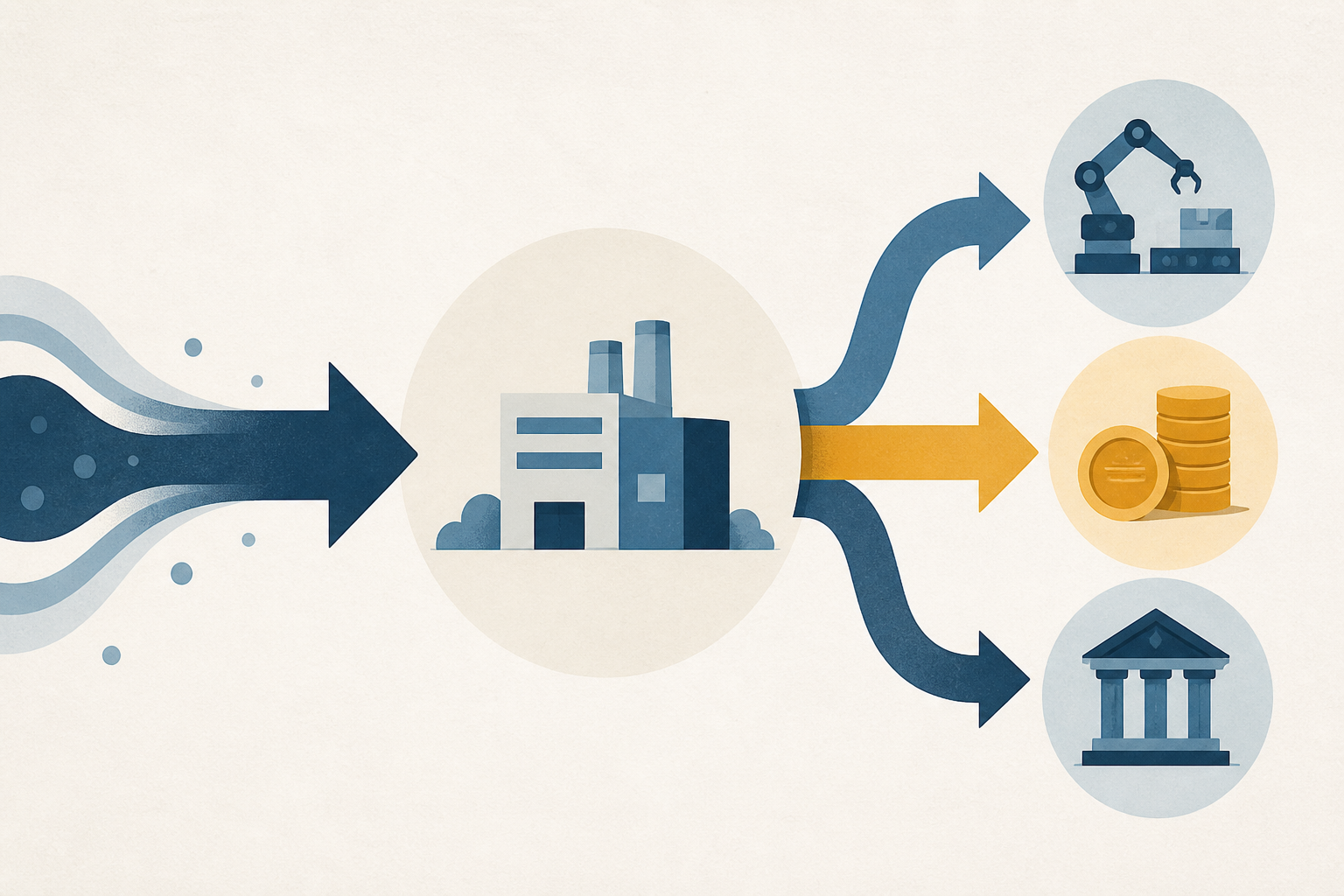
Define free cash flow
Free cash flow looks at cash left after operating cash flow is reduced by capital spending needed to maintain or grow the business. It helps connect accounting earnings with cash generation.
Align the calculation inputs
A high figure can reflect temporary working-capital changes or asset sales, so compare several periods. A growing company may have low free cash flow while investing heavily, which is not automatically negative.
Account for investment cycles
Review persistence, revenue growth, debt repayment, and capital returns alongside free cash flow. The metric becomes useful when connected to the company’s operating model.
Separate one-off movements
A common analytical shortcut subtracts purchases of property and equipment from operating cash flow. Yet leases, acquisitions, and capitalized development costs differ across companies, so the same formula may not capture the same economic burden. State the items included and apply the calculation consistently when comparing firms.
A hypothetical comparison
Imagine Company A reports lower free cash flow while investing in a factory that is about to open; Company B reports a temporary increase after reducing investment. The higher current figure alone does not prove that B is healthier. Review later productivity, debt repayment, and working-capital movements over several periods.
Trace how cash is used
Record the formula, period, currency, capital-spending scope, and one-off adjustments. Reconcile any company-defined non-GAAP figure with the cash flow statement and its adjustments. Free cash flow describes possible uses of cash; it does not independently guarantee a dividend or establish company value.